Space propulsion system control
Key results.
Thrust that scalesthrusters flying as one array, so thrust grows with the mission
One commandevery thruster in the array fires together from a single instruction
Orders of magnitude fasternot just the array: the whole software platform
The challenge.
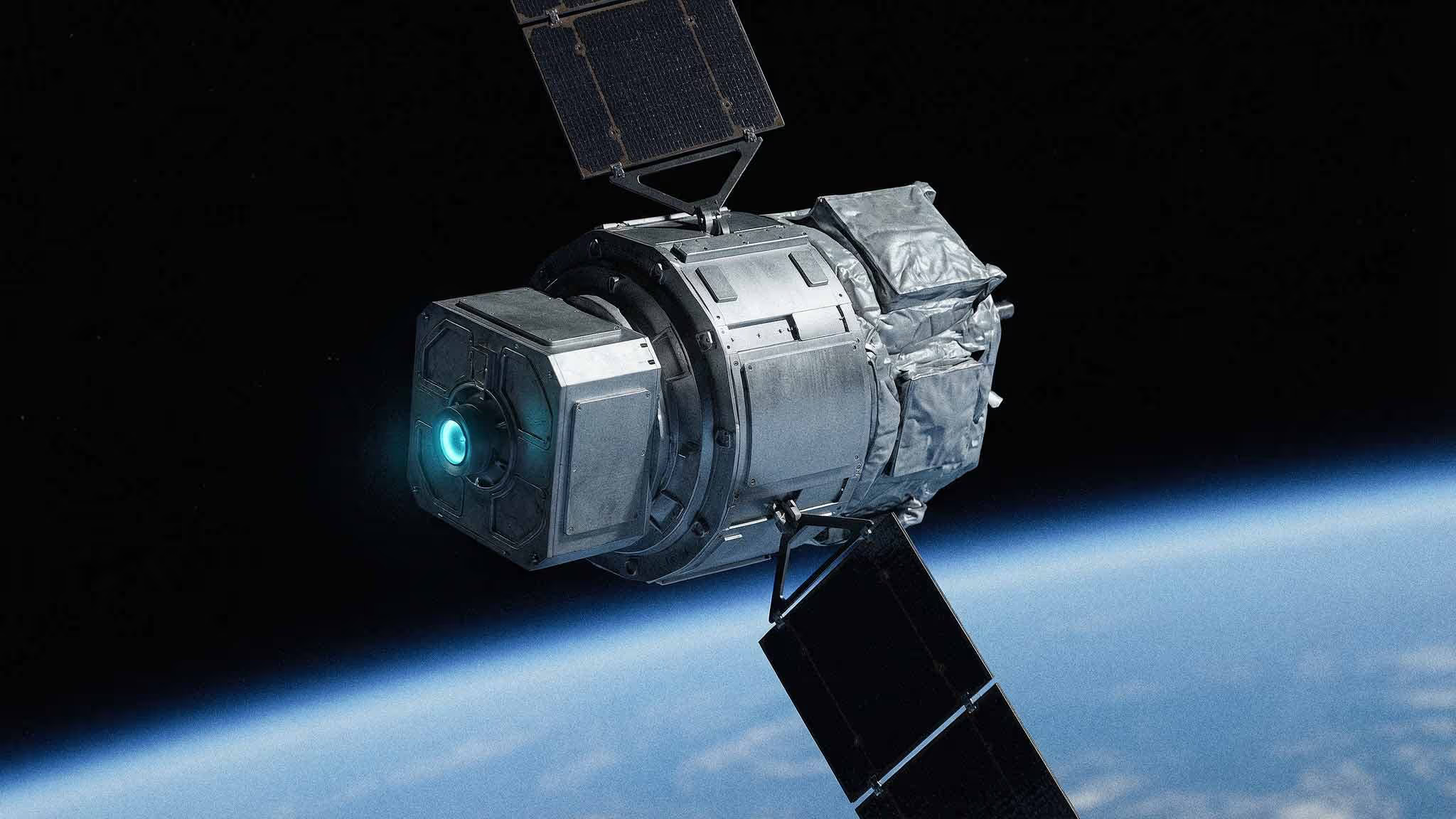
Small satellites need to move: to hold orbit, and to dodge debris more and more often. One thruster limits how much a satellite can do. The client's answer was an array: thrusters acting as one, so thrust scales with the mission.
That only works if they fire as one. Control was manual, thruster by thruster, and the timing between them wasn't tight enough to fly them as one.
Our approach.
The client needed the array to behave like one thruster, so we owned the control end to end: a supervisor program on the array's own control board, running every thruster as one system with a safety guard on every charge and fire, and a command deck that streams live data and logs every run.
Making the thrusters act as one meant finding where time was being lost across the client's control software. The fix didn't stop at the array: the whole platform got faster.
The client's team couldn't wait for flight hardware, so we built a three-stage hardware-in-the-loop test setup that let them prove the array's integration ahead of its launch test. Our engineers then worked inside the client's test facility to bring it up on the real thrusters.
What we delivered.
The array supervisor, the operator command deck, the three-stage test setup and the automated test suites behind it.
The outcome.
Thrusters firing as one from a single command, so thrust scales with the mission. What started as array control ended up making the client's whole software platform orders of magnitude faster. The client went into its launch test with the integration already proven.
We can't say whose. That's usually true of our best work.
Hooper Quinn Limited
Hillesden
Buckingham
MK18 4BY
United Kingdom
///genius.tempting.special