Prototyping is often misunderstood in the commercial world. This guide addresses common misconceptions and sets out a best-practice approach used by high-performing product teams.
Prototype testing rarely confirms a concept exactly as first imagined. It typically exposes opportunities to refine functionality, durability, certification readiness, customer experience, and performance — and occasionally reveals entirely new applications. The strongest teams plan for that reality financially, strategically, and technically.
┐
A prototype is not simply a first build, and prototyping is not a single “phase”. It’s an iterative process that runs through much of the product development journey. Below, we outline four phases that broadly constitute effective prototyping — mapped to Technology Readiness Levels (TRL 3–9).
┐

phase one
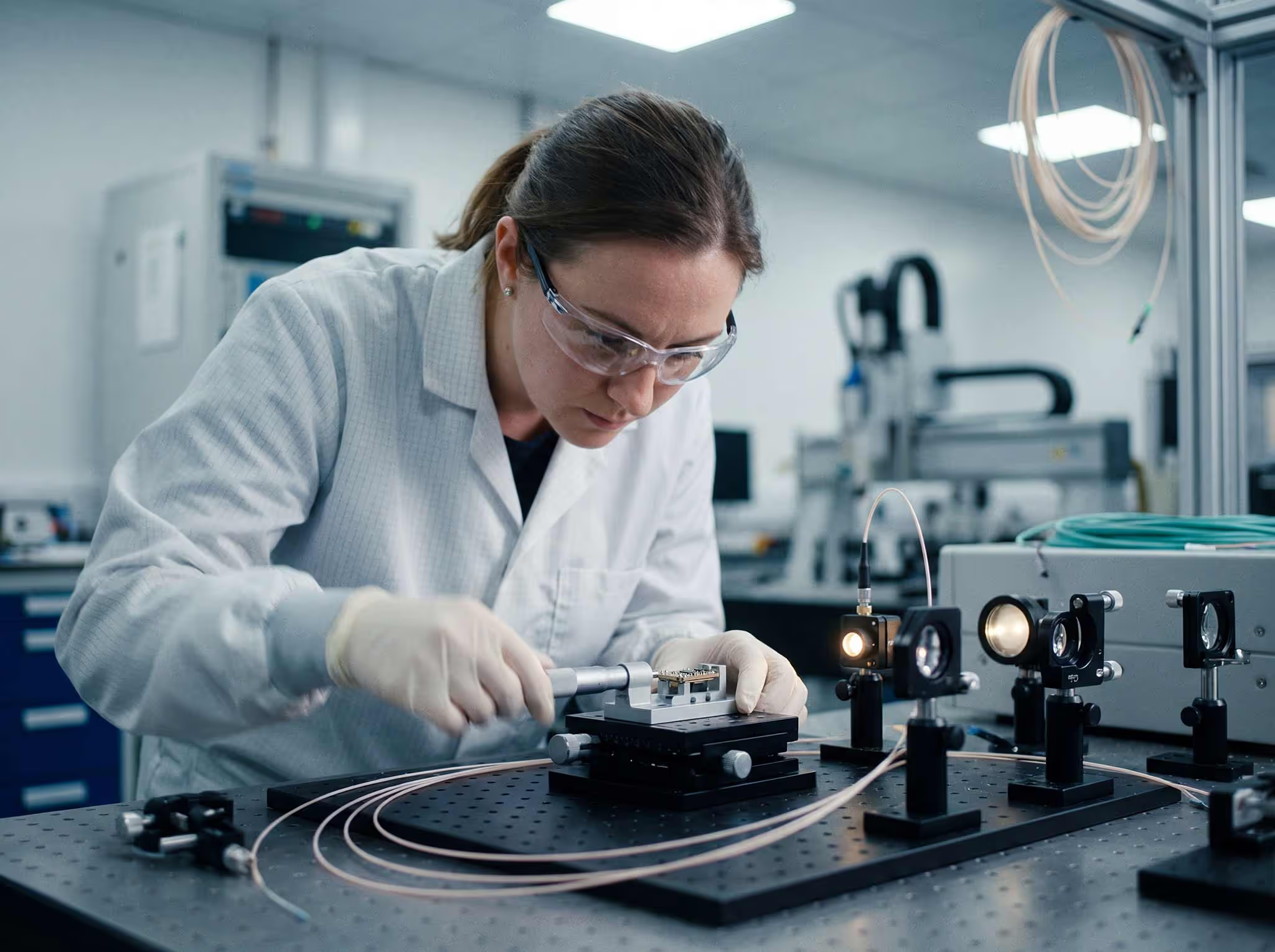
Proof of Concept
01
Proof of Concept
Objective
┐
Prove the product’s core technology (product-critical systems) can fulfil its intended function within current physical and technological constraints.
Technology Readiness Level
3
Stakeholder duties & expectations
┐
Directors and stakeholders should expect iteration. Concept requirements may change multiple times at this stage.
Typical prototype quantities
┐
Simple product: 1
Complex: 2
Complex: 2
Marketing
┐
None. No public awareness.
Core technology status
┐
Core technology is designed for integration with test equipment. Features may be added or removed to simplify assembly, reduce cost, or accelerate learning. Support systems and integration features will not yet represent the final product, and performance targets may not be met.
Product status
┐
The overall product concept is not yet the priority. Aesthetics are not a concern. Systems may be integrated into a simple enclosure or an existing “mule” to minimise time and cost.
Manufacturing & assembly method
┐
Manufacturing constraints should be considered, but prototypes are typically built using pragmatic, cost-effective methods. Assembly avoids specialist tooling where possible; any tooling is for development testing only.
Quality control
┐
In-house parts receive initial inspection; bought-in parts typically rely on supplier QC. Early QC is judgement-led, supported by existing business practices. A faults system is implemented to log issues and actions.
Design validation & testing
┐
Core technology is validated against product requirements. Specifications are reviewed and updated based on learning.
User experience testing
┐
Not performed. Work is lab-based and conducted by the development team. Serviceability (e.g., access and component replacement) remains a consideration.
phase two
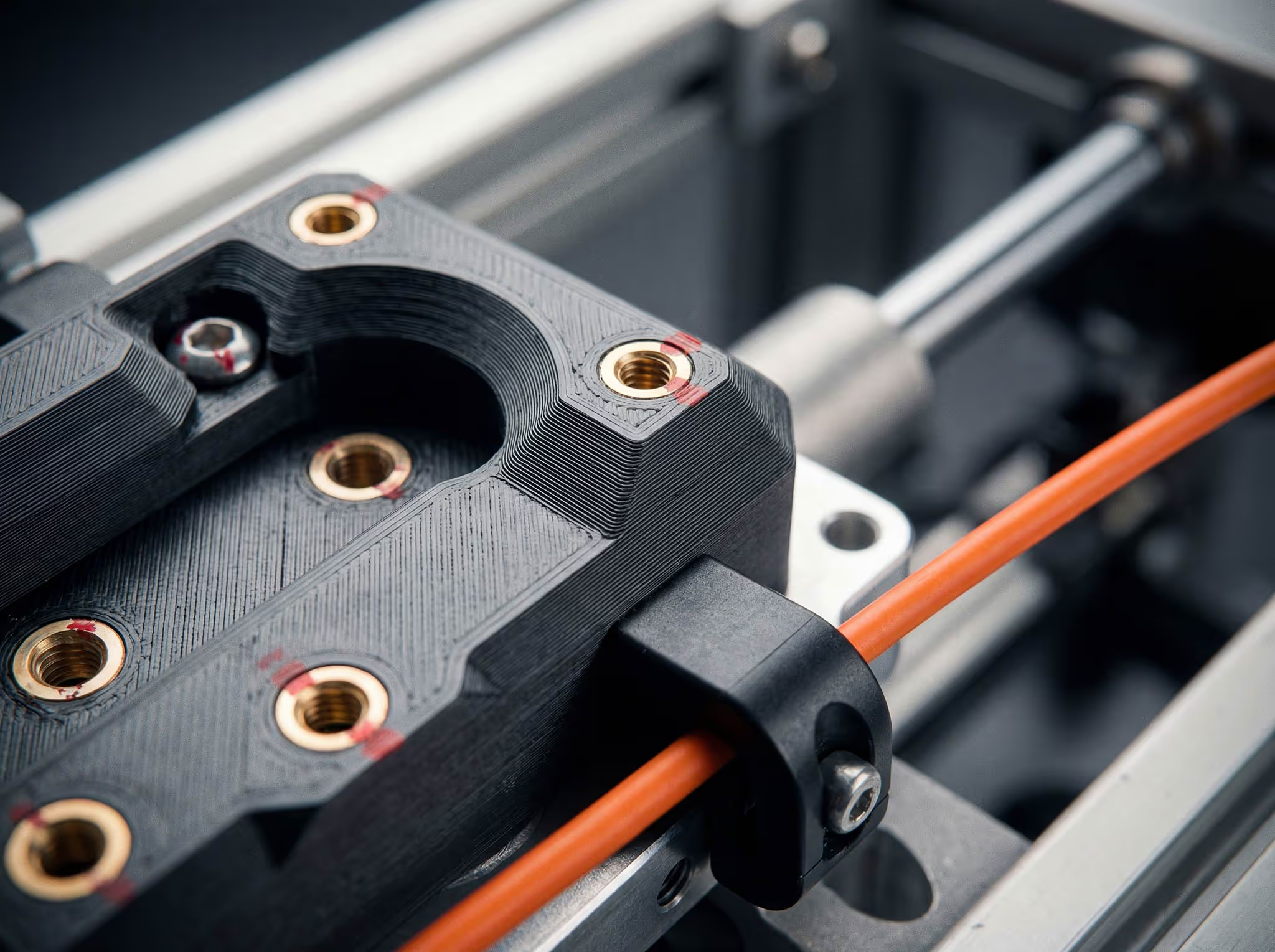
Experimental Phase
02
Experimental Phase
Objective
┐
Demonstrate that the overall product concept meets performance expectations against the requirements, and optimise durability using simulated environments.
Technology Readiness Level
4-5
Stakeholder duties & expectations
┐
Directors and stakeholders make final changes and sign off the overall product concept.
Typical prototype quantities
┐
Simple: 2-3
Complex: 10
Complex: 10
Marketing
┐
Initial rendered concept imagery may be shared to gauge interest.
Core technology status
┐
A design optimised for manufacture undergoes comprehensive performance and durability testing. Core technology and support systems are expected to meet performance targets within manufacturing constraints.
Product status
┐
Integration design and aesthetics are implemented as part of the overall product concept. This design should represent a best effort to finalise layout and appearance; changes occur only if testing or demonstrations expose issues.
Manufacturing & assembly method
┐
Mass-production tooling is typically not yet commissioned. Most parts use alternative manufacturing routes. However, critical or long lead-time items (e.g., castings) may follow production-intent methods to validate reliability early.
Quality control
┐
QC becomes formalised for core technology. Parts are inspected to drawing to assess accuracy and identify issues likely to cause failures. Bought-in parts may rely on supplier inspection. Relevant historical QC precedents are reviewed for fit.
Design validation & testing
┐
The product is tested rigorously against requirements in preparation for certification and demonstration. Where appropriate, sub-system testing is used to reduce risk and cost later.
User experience testing
┐
Customers do not yet have access. The developer or stakeholder acts as the user; UX findings inform interface development as a requirement-driven activity.
phase three
Demonstration & Certification
03
Demonstration & Certification
Objective
┐
Prove robustness in real-world environments using production-intent manufacturing processes. Establish the supply chain, achieve certification, and collect feedback from selected customers.
Technology Readiness Level
6-7
Stakeholder duties & expectations
┐
Design freeze. Directors and stakeholders should not introduce new design changes at this point.
Typical prototype quantities
┐
Simple: 3-5
Complex: 5-15
Complex: 5-15
Marketing
┐
Branding elements are integrated. Product imagery and performance figures may be released.
Core technology status
┐
Core technology is frozen. Testing focuses on proving durability and performance. Late changes (e.g., triggered by certification failure) can have significant cost and schedule implications.
Product status
┐
Layout and aesthetics are finalised. Changes occur only to resolve issues uncovered during certification or to address supply/manufacturing constraints.
Manufacturing & assembly method
┐
Parts move to mass-production methods wherever feasible. Exceptions are documented via a development specification. Supplier contracts are negotiated and signed. Assembly is trialled by an experienced production team; tooling and processes are formalised.
Quality control
┐
QC follows a production structure, typically:
Design approvals → Supplier/internal inspection → Stores → Build → Subsystem tests → Final assembly → Full system test
Production logistics (inventory handling, traceability) are implemented.
Design validation & testing
┐
Certification testing is completed as required (e.g., CE, UN, destructive testing, NVH, electrical and electromagnetic compliance), ensuring safety, quality, and performance.
User experience testing
┐
Ergonomics and interaction are tested to ensure the product feels, sounds, and functions to the required standard.
phase four
Full Prototype
04
Full Prototype
Objective
┐
Achieve production-level functionality with no unresolved issues across quality, manufacture, assembly, and customer perception. Final preparation for production and commercial sign-off.
Technology Readiness Level
8-9
Stakeholder duties & expectations
┐
Directors and stakeholders champion production readiness and business efficiency.
Typical prototype quantities
┐
Simple: 10-20
Complex: 15-25
Complex: 15-25
Marketing
┐
Full prototypes support product launch activity and initial orders.
Core technology status
┐
Core technology and support systems are manufactured using production tooling with no exceptions. At this level of integration, design changes can create far-reaching cost and delay.
Product status
┐
Final design-for-manufacture refinements are made to optimise the agreed production methods. Changes must be validated by stringent durability tests. The need for significant refinement at this stage typically indicates an earlier decision requires review.
Manufacturing & assembly method
┐
Production methods are used in ~99% of cases, including long lead-time items. Supply chains are established and tooling orders placed. Assembly processes are refined and approved, using formal build tooling.
Quality control
┐
Production QC processes are applied and formally audited. Sub-assembly sign-off testing and final inspection are concretised. Lessons learned are captured for future projects.
Design validation & testing
┐
Validation, durability, and performance protocols are repeatable and produce consistent results. A baseline is defined.
User experience testing
┐
User expectations are implemented and signed off at a detailed level. Aesthetics and branding match product intent and are identical to production units.
contact
Start Your Journey
If you’d like Hooper Quinn to support any phase in this guide, explore our Services Directory or contact us via the form below.
Send us an enquiry using the form or contact us via:
Email: enquiries@hooperquinn.com
WhatsApp: +44 7454 955625
Our team will quickly get up to speed with your project and invite you for a free initial consultation to discuss your requirements
We will prepare a full technical proposal outlining how to get your project to where it needs to be.
You’ll hear back from one of our engineers - not a salesperson.
Email: enquiries@hooperquinn.com
WhatsApp: +44 7454 955625
Our team will quickly get up to speed with your project and invite you for a free initial consultation to discuss your requirements
We will prepare a full technical proposal outlining how to get your project to where it needs to be.
You’ll hear back from one of our engineers - not a salesperson.
Success! We’ll be in touch soon.
Something went wrong while submitting.
Hooper Quinn Limited
+44 1280 360427
Lower Farm
Hillesden
Buckingham
MK18 4BY
United Kingdom
///genius.tempting.special
Hillesden
Buckingham
MK18 4BY
United Kingdom
///genius.tempting.special